The Wasabi Farm
What happens when answers become cheap
11
min

Adapted from my talk at Dscout Co-Lab 2026, Savannah.
We spent a decade trying to earn a seat at the table. We learned the language of the business. We proved our return in the metrics executives already trusted: conversion rate, NPS, customer lifetime value. That’s what it took to be taken seriously, and most of us did the work.

But I think we misunderstood the deal. We were never invited for the seat. We were invited for what we grew.
We thought they liked us. They liked the crop.
The crop was the workshops, the decks, the journey maps, the prototypes. Those artifacts were never just deliverables. They were our credibility, the visible evidence that somebody with years of accumulated knowledge had been at the work. Customers had been talked to. Tradeoffs had been weighed. Somebody knew what they were doing. Nobody had to inspect the reasoning behind a good journey map, because the map itself was the proof. You couldn’t make one without having done the work.
That’s no longer true, and I don’t think our profession has fully absorbed what it means.
The farm
Real wasabi is one of the hardest crops on earth to grow. It needs shaded mountain valleys where spring water comes up out of the ground cold and stays cold all year. The plant sits in the gravel of those streams for a year and a half, sometimes longer. You can’t hurry it, and you can barely help it. Mostly, a wasabi farmer learns to read the water: its temperature, its clarity, how it moves after a storm.

Almost none of that work is ever seen. Nobody eating it has stood in the valley or felt the stream. They taste the result, and for a long time, the result couldn’t be faked.

The synthetic
Then somebody faked it.
They figured out where the heat actually comes from, and it turns out you don’t need the plant to get it. Horseradish has it. Mustard has it. Add a little green dye and it looks the part. There’s no valley, no spring water, no eighteen months. It’s made in a factory and squeezed from a tube. You get most of the heat, none of the stream, at a fraction of the cost. It’s what almost everyone means by wasabi now.
Something remarkably similar just happened to us. The agents write the report. Synthetic users back it up with research. The journey map draws itself. And the prototype? We just vibe code it.
Anyone can now make something that looks like somebody designed it. I’m going to call all of that the synthetic.
For years our field talked about the democratization of design: the hope that design thinking would spread through organizations and make everyone a little better at solving problems for people. We skipped democratization and went straight to commodification. The expertise didn’t suddenly become abundant. The artifacts did. Some of them are good and some of them are garbage, and from across the table they look exactly the same.

The ordinary plate
Here’s the uncomfortable part: the synthetic works.
Most people have never had real wasabi, and they aren’t worse off for it. The substitute isn’t the same, and it doesn’t have to be. On most plates, the difference isn’t worth the cost.
I think we have to be honest enough to admit the same thing about our own work. Not every prototype needs weeks of craft. Not every question needs a new study. Sometimes the thing somebody built with AI in twenty minutes is enough. For a lot of what my team gets asked, it is enough. Most decisions don’t wait for us, and if we’re honest, most of them never did.
That doesn’t mean the real thing stopped being better. It means better isn’t worth paying for every time. If our response to this moment is to insist that every plate deserves real wasabi, we’re not defending design. We’re arguing with the economics, and we’ll lose.
The acres
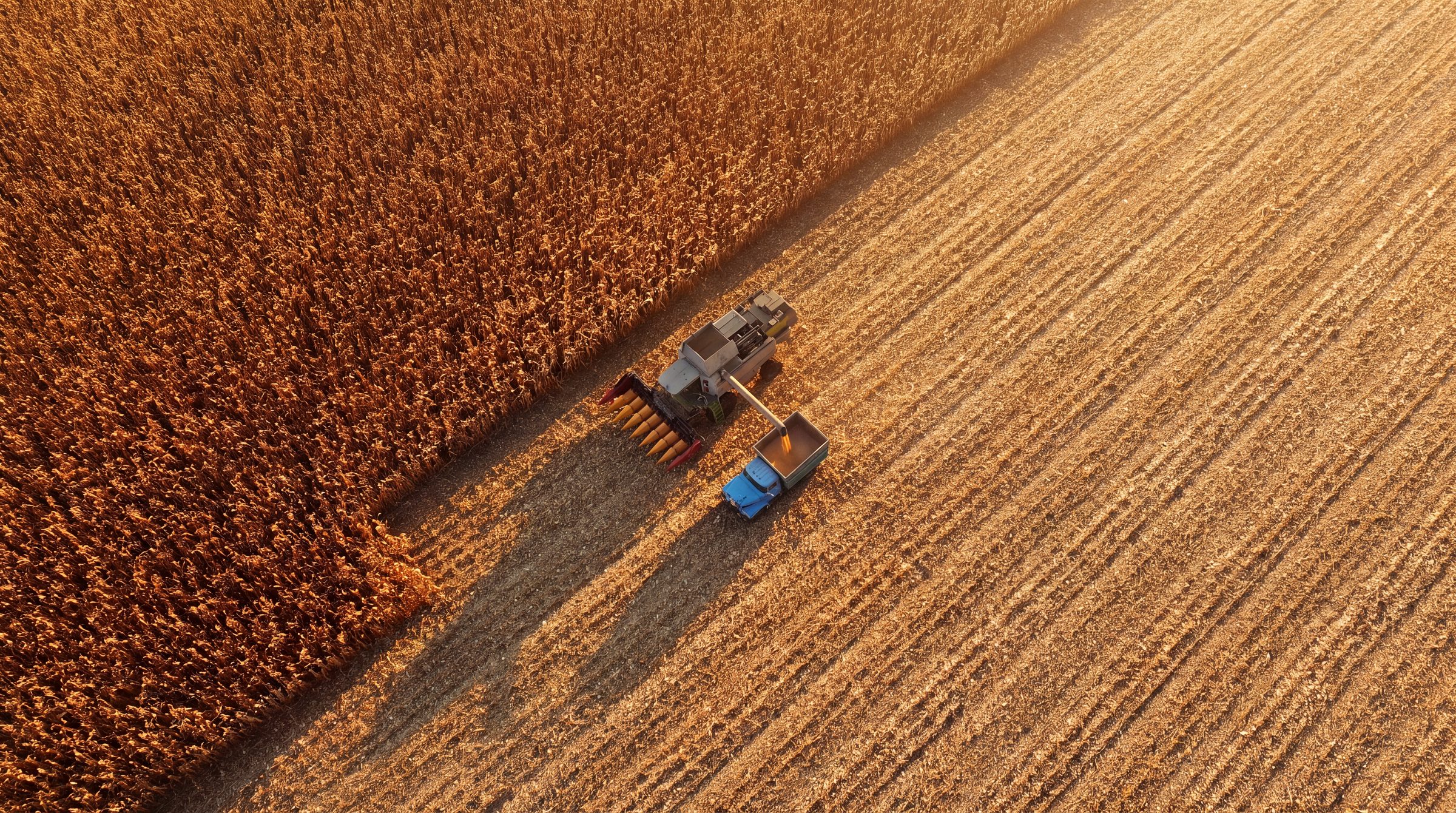
There’s an irony here. To keep our seat, we accepted the terms that came with it: studies completed, features shipped, hours saved. We volunteered to be measured in acres. That’s how you measure corn, and nobody asks who grew the corn.
So now that the crop has lost its price, our instinct is to grow more of it, at a scale that’s hard to picture. Where I work, we run an average of 45 billion tokens a day. That’s a lot of acres.

The stream
Wasabi was never limited by acreage. The constraint is the stream: cold, clean water moving all year, held steady over a long time.
AI gave everybody infinite acres. Nobody got more stream.
You know what grows on an acre with no stream?

Horseradish.
Nobody got more hours in the room with customers. We got more transcripts, but not more time sitting across from someone while they struggle with something we made. Nobody got more seasons inside the business, or more memory of why the last attempt failed, the real reason that never made it into the deck. Those still build one season at a time, and there’s no prompt that speeds them up.

Reading the water
What all that time in the stream gave us was never the crop. Anybody can make the crop now. It gave us the ability to read the water.
That’s the ability to look at an insight and tell whether it’s new, or just the average stated with confidence. To look at a prototype and tell whether it solves our customer’s problem, or just a common one that sounds similar.
Here’s what that looks like in practice. Not long ago, my team was asked to support a new offer for small businesses. The headline promise was speed: get connected faster than anyone else. It was a reasonable bet. Ask a model what small businesses want from internet service and it’ll tell you speed, simplicity, and price. Every one of those is true in general.
Then the team sat with actual small-business owners. Speed of setup barely registered for them. What they cared about was whether the connection stayed up, and whether a human picked up the phone when it didn’t. Think about what an outage means for a restaurant on a Friday night. It isn’t an inconvenience; it’s the end of taking card payments. No synthetic user was going to tell us that the premise itself was the wrong bet. It took people who had been in the water long enough to hear the difference between what customers say they want and what they would actually pay to protect.
That’s the distinction that matters now. Knowing how to design is one thing. Knowing how to design here is another: for this customer, inside this business, during this particular bad season. The synthetic is very good at what’s usually true. It’s also telling your competitor exactly the same thing. The stream is how you find out what’s true here.
For years, the artifact was how everyone knew that kind of knowledge existed. Now the artifact can exist without it. That doesn’t make the stream less valuable. It makes it harder to see. And when the work itself stops signaling who knows what they’re doing, people start looking at whose name is on it instead.

The real and the synthetic
So what do we do about it, as leaders?
Here’s where I’ve landed: we ship both. Standing at the edge of the field yelling “that isn’t real wasabi” isn’t a strategy. I use the synthetic. So do you, and so does your team, whether or not they’ve told you.
But it goes out under our name, and that has to mean something specific. It means someone looked at it. It means it clears our floor. And if it’s wrong, that’s on us. A name is only worth something if there are things you won’t put it on.
So my rule is simple:
Tube by default. Water by exception.
That turns the whole problem into one question: what deserves the water?
When I’m deciding, I ask myself one thing: if we’re wrong, who finds out, and when? If it’s us, tomorrow, in a test, squeeze the tube. If it’s a customer, six months from now, in a renewal conversation that doesn’t go our way, that plate gets the real thing.
Knowing which plate is which is the job now. That’s what the seat is for.
For a while, I thought that was the whole argument.

What came free
Then I asked myself a harder question: how did I learn to tell which plate gets the real thing?
I didn’t learn it from a report. I learned it in the water. The interviews where the answer I expected never came. The site visits where the real workflow was taped to the side of a monitor instead of written in the requirements. The capital planning meetings where I watched a good idea die because nobody could explain what it was worth. The bad seasons.
Every real study did two things. It answered a question. And it left somebody on the team a little better at telling the difference.
We only ever budgeted for the first part. The second part came free.
It’s worth being specific about what that second part was, because it’s exactly what we’re about to stop paying for without noticing.
Picture a junior researcher on her first real study. She writes the screener and discovers that the customers we assumed existed are harder to find than anyone thought, which is itself an insight about the market. She sits through twelve interviews, and by the eighth she can predict where people will hesitate before they get there. She takes notes while a senior researcher asks a follow-up question she would never have thought to ask, and she starts to understand why it mattered. She watches a stakeholder wave off a finding, and then watches it come true at launch.
None of that shows up in the readout. The readout is the first part. The second part is a person who now carries context, judgment, and a feel for the gap between what customers say and what they do. Over a few years, she becomes the one who can connect dots nobody else in the building can see. Eventually she becomes the one who knows which plate needs the real thing.
The synthetic gives you the first part faster and cheaper, and I’m glad it does. It gives you none of the second.
There’s a reasonable objection to this, and I’ve heard it from people I respect. Apprenticeship has always changed with the tools. Nobody learns to draft by hand anymore, and architecture survived. Maybe AI doesn’t remove the learning; maybe it speeds it up. A junior with good tools can try more ideas, test more often, and get feedback in hours instead of weeks.
Some of that is true, and I hope more of it turns out to be. But speeding up the work isn’t the same as speeding up judgment. The tools make the repetitions cheaper. They don’t put you in the room when a customer goes quiet in the middle of a sentence, and they don’t make you sit with being wrong in front of people who were counting on you to be right. Judgment comes from consequences, and consequences still take time. If AI shortens the path to judgment, wonderful. My worry is that we’ll remove the path entirely, assume the tools replaced it, and only discover otherwise when there’s nobody left who could have told us.
The rule, followed
Now watch what happens when we follow the rule faithfully.
We skip the study, because the synthetic answer is cheap, fast, probably right, and fits the timeline we were given. We stop sitting in on sessions and start reading the summary. Then we ask AI to summarize the AI’s summary. When the junior who used to write the screener, take the notes, sketch the first wireframes, and run the usability sessions moves on, we don’t backfill the role. The tools cover most of it.
Each of those decisions is reasonable. Each one follows the rule. I’ve made them, and I’d make most of them again. That’s the problem.
Someone in finance has already done the math: a few senior people and a software subscription. For a couple of years, they’ll be right.
Tube by default, water by exception. But somebody has to call the exception, and they learned how in the water. By default, nobody’s in it anymore.
Most people have never had real wasabi, and that’s fine. They don’t need to. But we do. Without meaning to, we’re building teams who will never have tasted it, led by people who haven’t in years.
Someday the plate that matters is going to go out with the synthetic on it. Nobody in the building will notice. The customer will.
The empty beds
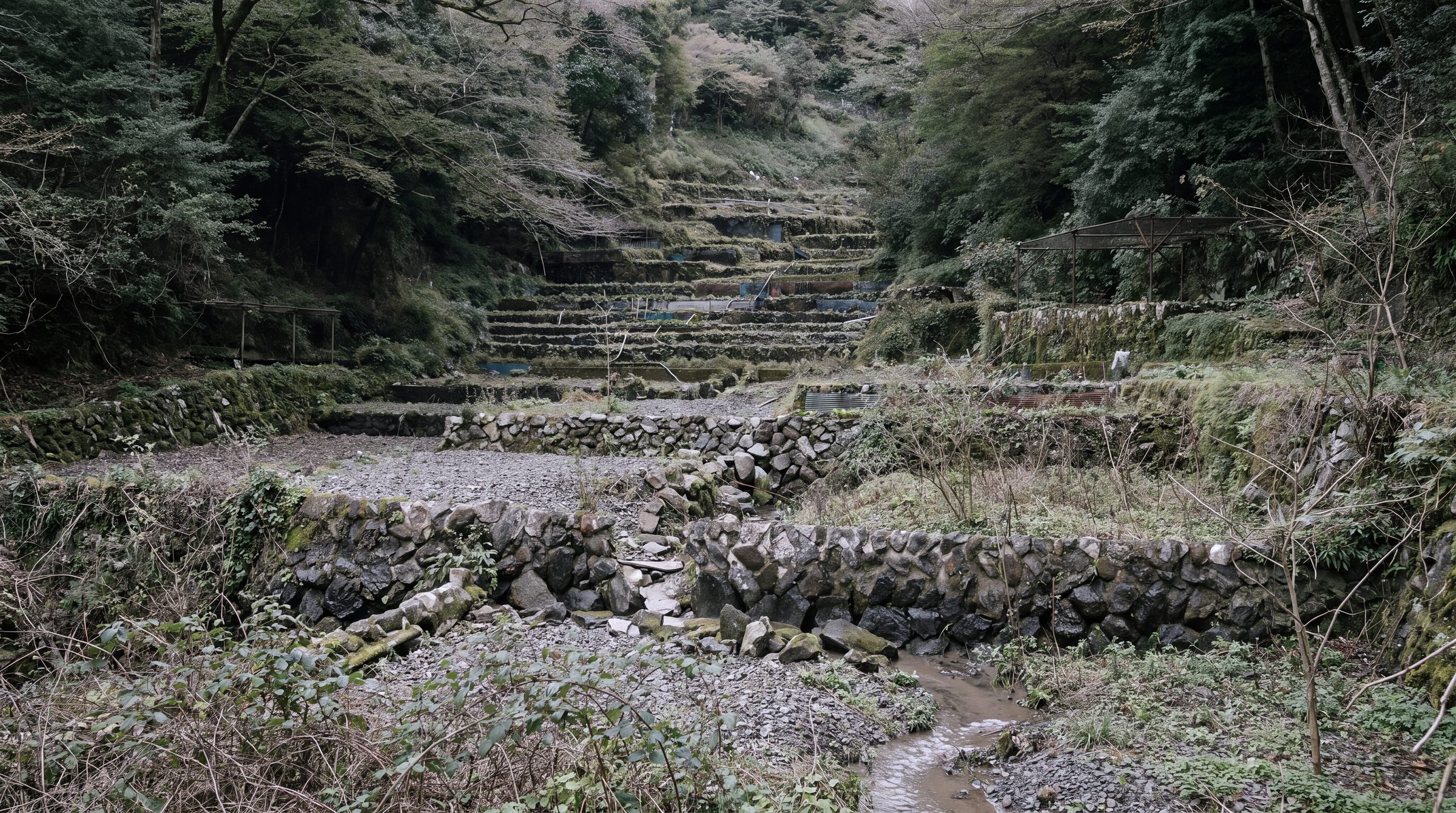
What about the real farmers? Japan’s harvest of stream-grown wasabi has fallen by half since 2005. It’s not because people stopped wanting it. The farmers are aging out, and nobody is taking over the beds.
I don’t have a clean answer for this. I have an expensive one.
I’m not going to tell you to do every study by hand. I already said that would mean arguing with the economics, and I meant it. But the rule needs one more condition:
Tube by default. Water by exception. And somebody always in the water.

That somebody is the person who will connect the dots nobody else in the building can. Their learning used to come free with the work. Now it has to be a line item, something you budget for deliberately and defend when the spreadsheet says you shouldn’t.
Here’s the part that sounds irresponsible: run some studies you don’t strictly need. Not for the answer, because the tube already gave you that. Run them for whoever is running the study, and for whoever is sitting in. Put your most promising junior people in rooms with real customers, even when a synthetic answer would have been good enough. Keep someone senior sitting in on sessions, not just reading summaries, so they don’t lose the taste either. Hire the junior role you were tempted not to backfill, and be clear with yourself about why.
My name goes on the synthetic, and that only means something if somebody on my team has had the real thing.

The farm, again
AI gave us infinite acres. It didn’t give us more water.
We were invited for what we grew. If we stay, it’ll be because we can tell the difference. And we can only tell the difference if somebody is still in the water.
Who on your team is?
Are you?
Sources: AT&T token volume from Andy Markus, “The Tokenomics Equation,” AT&T, July 2026. Wasabi harvest from Reuters via Taipei Times, July 2022, citing Japan’s Ministry of Agriculture, Forestry and Fisheries.